Behaviour for learning
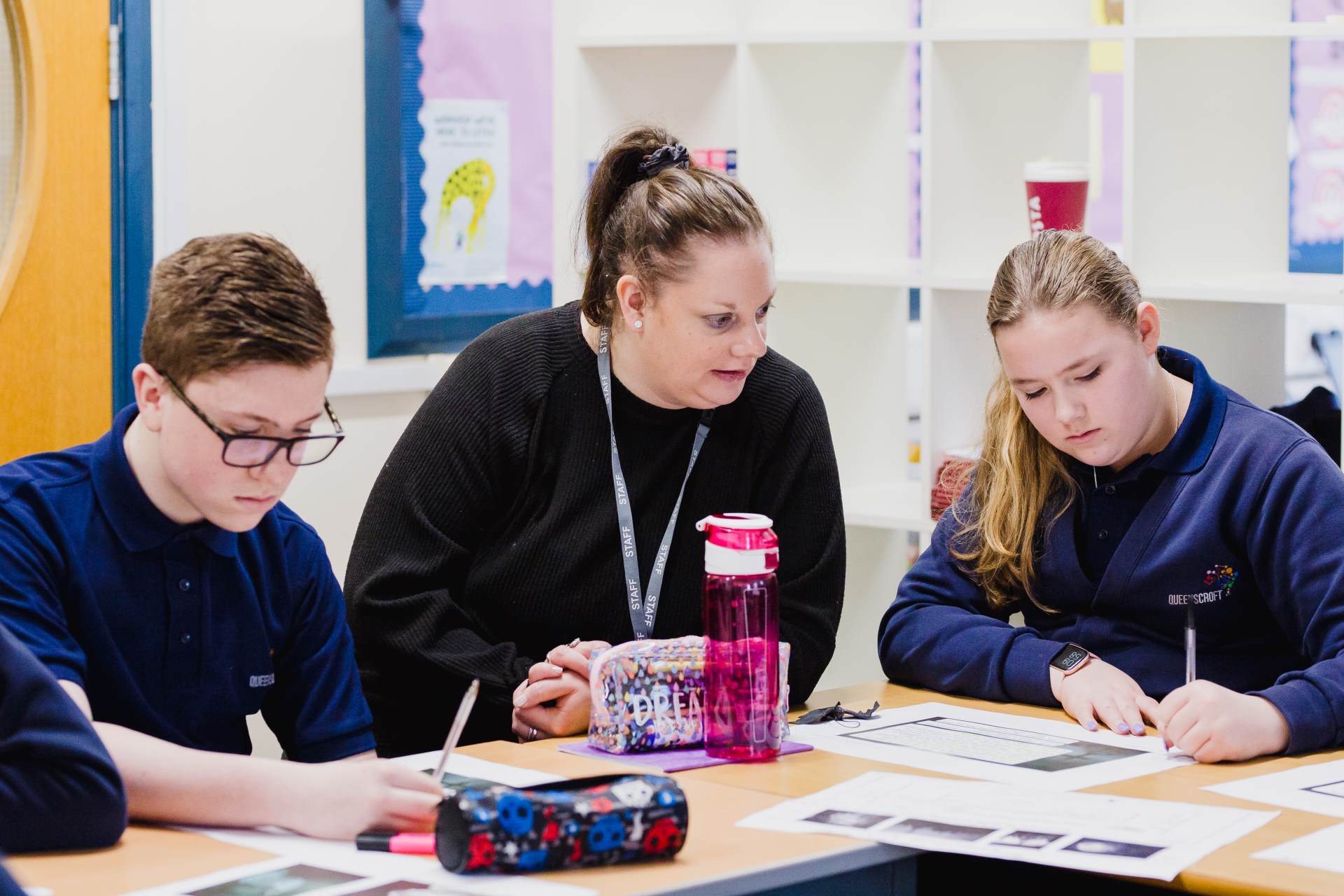
Good behaviour is key to a good education. Here at Queen's Croft High School, we provide our students with a calm and orderly place to learn. The positive and nurturing relationships between staff and students very much sets the ethos and culture within our school.
We have three core behaviour for learning principles (rules) which we refer to as KERC:
- We expect everyone to show Kindness
- We expect everyone to Engage in Learning
- We expect everyone to show Resilience and Courage
Queen's Croft is proud to have created a culture where students and staff flourish and this culture is set by the governors and leaders of our school. Staff are guided, supported and trained to make sure that they collectively embed this school culture, upholding the schools’ behaviour policy at all times and responding to misbehaviour consistently and fairly.
As part of our curriculum, pupils are taught at an appropriate level to their needs, what good behaviour looks like. Some pupils will need additional support to reach the expected standard of behaviour.
Queen's Croft High School promotes Readiness for Learning throughout our curriculum and the school day. We provide an environment which fosters students’ achievements, talents and interests and ensure they have the knowledge and skills to be ready for the wider world.
positive behaviour policy 2026.pdf
Celebrating Positive behaviour at Queen's Croft High school
Queen’s Croft High School prides itself on celebrating every achievement, recognising that success looks different for every learner. Celebrations take place at all levels of school life — from class‑based recognition and key stage assemblies to acknowledgements from senior leaders or even the Headteacher. We use a wide range of approaches to highlight pupils’ accomplishments, ensuring that every child feels valued and motivated. Whether it’s academic progress, personal development, or contributions to the school community, we believe that celebrating success builds confidence, strengthens relationships, and inspires pupils to continue striving for their best.
Behaviour curriculum
Our curriculum is designed to teach children the value in positive behaviours, promote independence and prepare them for adulthood. Positive behaviour is promoted in many ways; modelling good behaviour, developing quality relationship between pupils and staff, showing mutual respect and celebrating positive achievements. Our positive behaviour principles are;
|
Behaviour learning principles (KERC) |
We want pupils… |
|
Kindness |
We want all pupils to know and understand how to be compassionate, honest, and caring |
|
Engagement |
We want all pupils to be creative, take pride in their achievements and be reflective of self and others |
|
Resilience |
We want all pupils to be persistent in trying something new, persevere when things don’t go to plan, and be patient with others |
|
Courage |
We want all pupils to be determined to do GREAT things, to show self-control in their own choices and behaviours, and have the will-power to do GREAT things. |
Our Ethos s that KERC is the way which we behave, this includes how pupils behaviour to each other and how staff model this behaviour to pupils and each other.
Ways which KERC is embedded into the school curriculum and culture;
- Reward charts and in class motivators use in individualised and personalised ways
- Sleuth tracks positive behaviour points alongside KERC goals
- GREAT Fridays are a large part of the curriculum and the goals of GREAT Fridays are linked to KERC and promote positive behaviour, attitudes and relationships.
- Responsibility, considering others, friendships and emotional regulation are all key themes within the PHSE curriculum.
- Restorative practice – we use restorative conversations to help pupils understand the impact of their actions and provide a structured way for relationships to be repaired.
Each child will have a positive behaviour plan as part of their pupil profile, the aim of the positive behaviour plan is to show each child’s “ordinary” behaviours and the strategies which are put into place in order to help maintain and regulate positive behaviours. Positive behaviour plans are individualised and depending on a child’s needs will include a range of emotional and sensory regulation strategies alongside reasonable adjustments that may be required to ensure all pupils can be successful. They are informed by the team around the child and then shared and agreed by parents and pupils (where appropriate).
restorative practice
At Queen’s Croft High School, restorative practice plays a central role in nurturing positive behaviour and helping pupils understand the impact of their actions. Our approach focuses on reflection, accountability, and meaningful conversations that guide children toward making better choices. The school is proud to have five trained restorative facilitators, supported by a team of dedicated student mentors, who work together to create a culture of respect and responsibility. By combining restorative dialogue with logical consequences, we help pupils recognise how their behaviour affects others and support them in developing the skills needed to repair relationships and move forward positively.
For more information: